Author: Drew Wang
Virginia Tech’s Effluential Hokies win VWEA wastewater student design competition, advance to WEFTEC 2026
Virginia Tech's Effluential Hokies have won the wastewater division of the Virginia Water Environment Association Student Design Competition for the second year in a row, earning the opportunity to represent Virginia at the national WEF Student Design Competition at WEFTEC 2026 in New Orleans.
The VWEA competition gives student teams real-world, consultant-style experience through a written design proposal and oral presentation. This year's challenge asked teams to develop a preliminary engineering response for phosphorus improvements at the Henrico County Water Reclamation Facility. The Virginia Tech team prepared a professional design package recommending a phosphorus removal upgrade strategy centered on intentional enhanced biological phosphorus removal, expanded return activated sludge fermentation, dedicated anaerobic zones, methanol as a backup carbon source for denitrification, and chemical phosphorus polishing as a contingency measure.
Their work integrated regulatory review, process design, hydraulic analysis, modeling, and cost evaluation to propose a practical and resilient pathway for Henrico Water to meet more stringent future phosphorus limits.
The team brought together students from Biological Systems Engineering and Civil and Environmental Engineering. Yitao Li, a Civil and Environmental Engineering Ph.D. student advised by Dr. Zhiwu Wang, served as student lead and project lead, coordinating the overall effort, guiding the technical direction, developing the process flow configuration, and leading BioWin model calibration and simulation. Mingxi Wang, a Biological Systems Engineering Ph.D. student advised by Dr. Wang, served as senior process engineer and contributed to the enhanced biological phosphorus removal design, anaerobic zone configuration, nitrogen removal strategy, and chemical polishing evaluation. Siyi Chen, a Biological Systems Engineering Ph.D. student advised by Dr. Wang, served as process engineer and led the design of the return activated sludge fermentation tanks, including volatile fatty acid production evaluation, sludge splitting requirements, and tank volume calculations. Cyrus Li, a Biological Systems Engineering Ph.D. student advised by Dr. Wang, served as hydraulic engineer, leading hydraulic analysis and GIS-based routing for the sidestream fermentation system. Jackson Becker, a Civil and Environmental Engineering M.S. student advised by Dr. Amy Pruden, served as project engineer and focused on capital and recurring cost estimation.
The student team was supported by technical coaches Dr. Zhiwu Wang, Dr. John T. Novak, and Dr. Yewei Sun, an adjunct assistant professor in Biological Systems Engineering. Together, the students demonstrated the strength of Virginia Tech's interdisciplinary wastewater engineering training by translating a real utility challenge into a forward-looking, technically grounded design solution.
With the state title secured, the Effluential Hokies will carry that momentum to WaterJAM and then to WEFTEC 2026.
Dr. Xueyao Zhang receives Virginia Tech’s university-wide 2026 Outstanding Dissertation Award in STEM
Dr. Xueyao (Kira) Zhang, a recent Ph.D. graduate from Dr. Zhiwu Wang's research group, has received Virginia Tech's 2026 Outstanding Dissertation Award in the Science, Technology, Engineering, and Mathematics (STEM) category. This is a university-wide honor: only one dissertation is selected each year across all Virginia Tech STEM disciplines for this award.
Only one dissertation is selected each year across all Virginia Tech STEM disciplines for this university-wide Outstanding Dissertation Award.
The award was presented as part of Virginia Tech's Graduate Education Week. Virginia Tech News listed Zhang as the recipient of the Outstanding Dissertation Award in STEM during the Graduate School's annual awards reception, held March 26 in the Graduate Life Center. The recognition honors exceptional doctoral scholarship and is one of the Graduate School's most selective dissertation awards in STEM.
Zhang’s dissertation, Harnessing Haloferax mediterranei for Bioplastic Production from Organic Waste, advances scalable bioprocesses for converting organic waste into polyhydroxyalkanoate (PHA) bioplastics. Her work supports waste valorization and circular bioeconomy applications by connecting organic waste pretreatment, microbial fermentation, and process development for biodegradable bioplastic production.

According to the Graduate School award notification, the faculty review committee recognized the originality and high-impact potential of Zhang's research, its contribution to the scientific community, and the quality of her final dissertation document. The award includes a certificate and a $1,000 honorarium from the Graduate School.
Zhang is now a postdoctoral scholar in the Biological and Agricultural Engineering Department at the University of California, Davis, where she continues to work on sustainable and scalable bioprocessing systems that convert organic waste into value-added materials, fuels, and chemicals. UC Davis Biological and Agricultural Engineering also highlighted her award-winning dissertation as an integrated pathway for transforming food waste into biodegradable bioplastics.
Zhang credited her advisor, Dr. Zhiwu Wang, her Ph.D. committee members, collaborators, and supporters for their guidance throughout the research. Congratulations to Dr. Zhang on this outstanding recognition and on the continued impact of her work in bioplastics, waste valorization, and circular bioeconomy.
Congratulations to our team winning the 2nd-place victory in the WEF’s International Student Design Competition
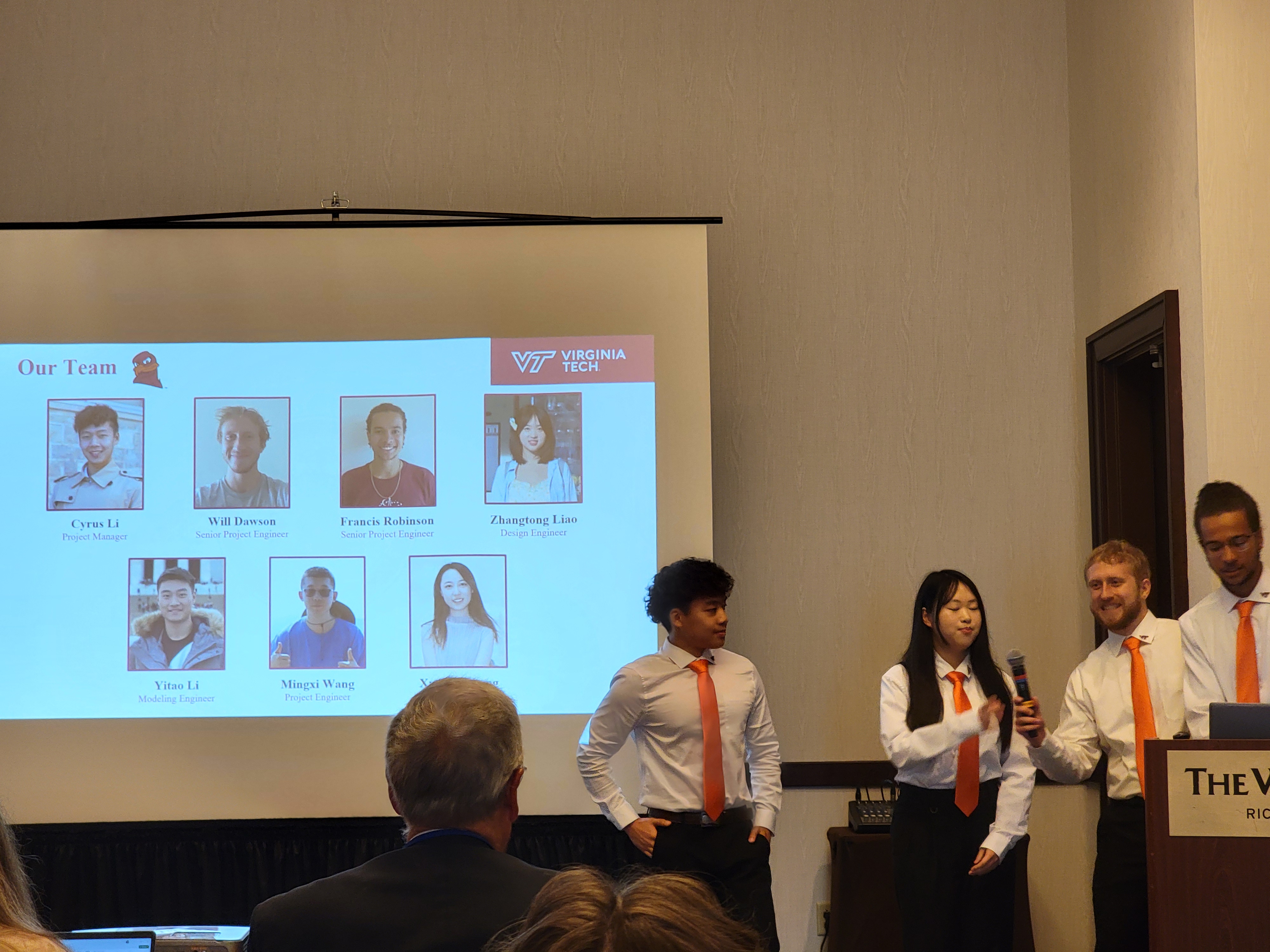
Virginia Tech’s Effluential Hokies team made of Cyrus Li, Yitao Li, Zhangtong Liao, Xueyao Zhang, and Mingxi Wang from Dr. Zhiwu Wang’s lab along with Francis Robinson and Will Dawson from Dr. Amy Prudent’s lab won the 2nd place award in the Wastewater Category with their exceptional project focused on the Chincoteague WWTP Improvements in Water Environment Federation’s (WEF) International Student Design Competition at Chicago on Sep 28, 2025. $1,000 was awarded. The Effluential Hokies team was coached by Dr. John Novak and Dr. Yewei Sun.


Dr. Zhiwu (Drew) Wang is honored with Saied and Parynaz Mostaghimi Excellence Award in Applied Research Award
Dr. Zhiwu (Dew) Wang received the Saied and Parynaz Mostaghimi Excellence in Applied Research Award. As a director of the Center for Applied Water Research and Innovation, Dr. Wang has pioneered processes that reduce energy use and chemical demand in wastewater treatment, saving utilities money and lowering greenhouse gas emissions. His team has also developed microbes that convert food waste into biodegradable plastics, advancing a circular economy.
Media source: https://news.vt.edu/articles/2025/09/cals-2025-faculty-staff-awards.html
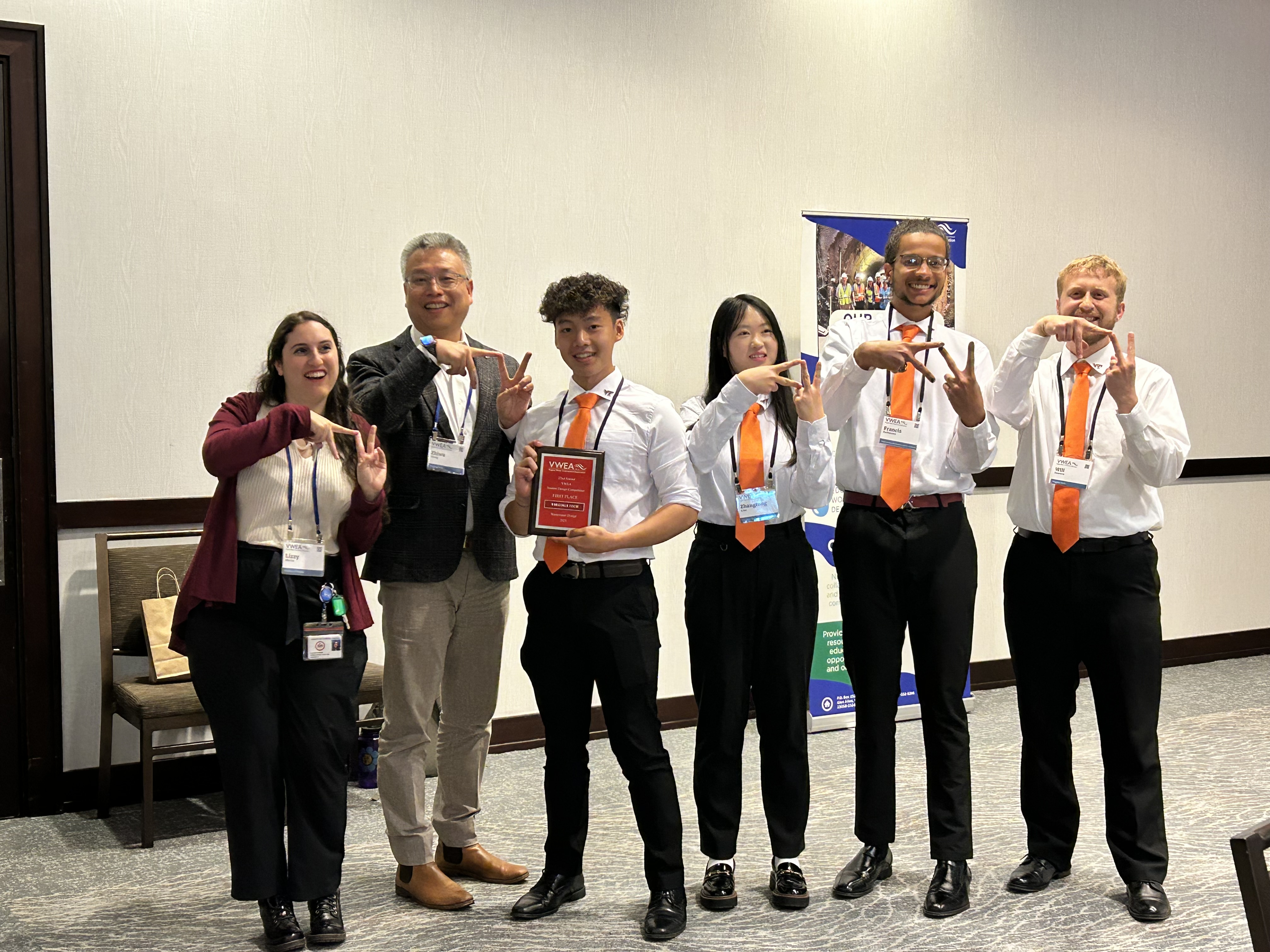
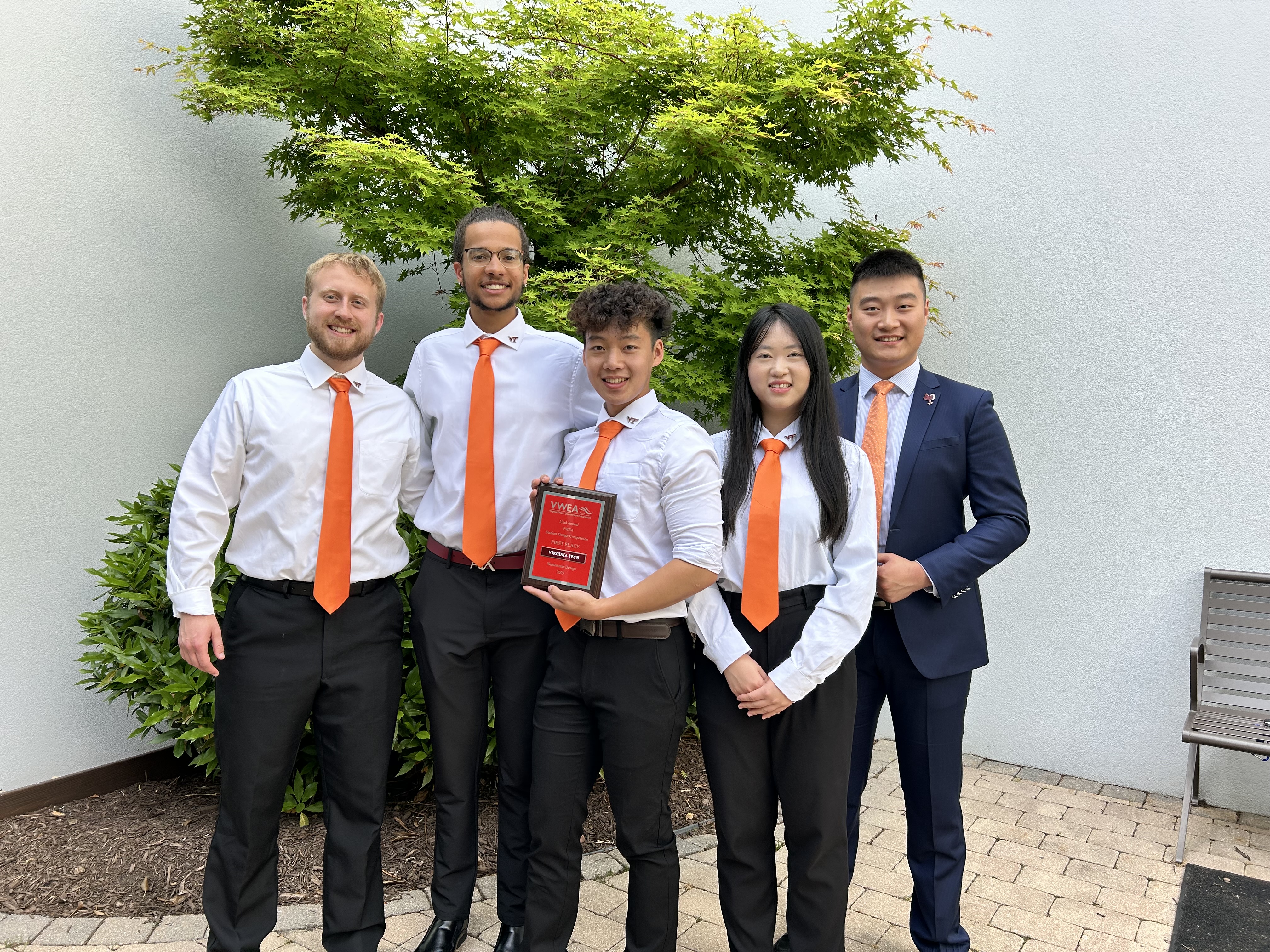
Congratulations to our team winning the 1st-place victory in the Wastewater Category in the 22nd Annual VWEA Student Design Competition!
Hi Folks,
I am thrilled to share some exciting news from the 2025 Virginia Water Environment Association (VWEA) Student Design Competition held last week! The Effluential Hokies team, representing Virginia Tech, with students from both our Civil and Environmental Engineering, and our Biological Systems Engineering program, claimed a first-place victory in the Wastewater Category with their exceptional project focused on the Chincoteague WWTP Improvements.
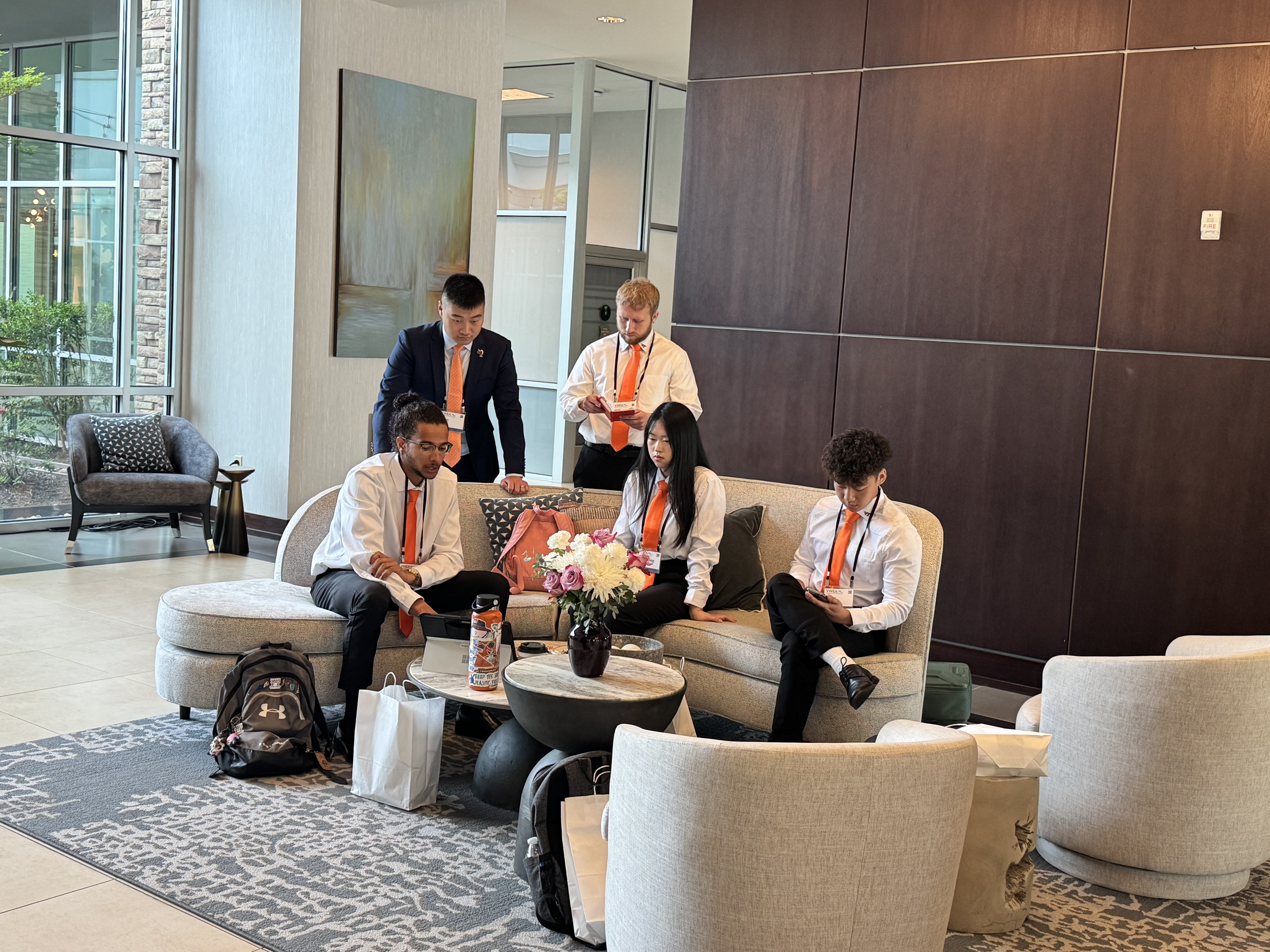
Virginia Tech’s Effluential Hokies team made of Cyrus Li, Yitao Li, Zhangtong Liao, Xueyao Zhang, and Mingxi Wang from Dr. Zhiwu Wang’s lab along with Francis Robinson and Will Dawson from Dr. Amy Prudent’s lab. The team was coached by Dr. John Novak.
By earning first place at the state level, the Viriginia Tech team has now earned the honor of representing Virginia at the Water Environment Federation’s (WEF) International Student Design Competition this October in Chicago. This international competition, held during WEFTEC—one of the world’s largest water quality conferences—brings together top student teams from across the globe to showcase their innovative solutions to pressing water challenges.
I wanted to make sure you saw the LinkedIn Post from VWEA Student Design – LinkedIn Post and were aware of our Hokie winners from the competition. Here’s a list of our students who are working under Professor Zhiwu Wang and Professor John Novak, who did an excellent job mentoring these students this past semester.
Students that make up the Effluential Hokie’s Wastewater Design Competition Team:
Cyrus Li, Zhangtong Liao, Will Dawson, Xueyao Zhang, Yitao Li, Francis Robinson, and Mingxi Wang
Ms. Elizabeth Merin, Engineer III, EIT, ENV SP in the Wastewater Design and Construction Division, Capital Facilities, DPWES, County of Fairfax.
Virginia’s Land Grant Universities Conduct Critical Research for the Next Generation
Virginia’s land grant universities were established to research and address local challenges and disseminate that information to the public. Virginia Tech and Virginia State University are doing just that as they conduct critical research for the next generation of farmers and consumers with cost-saving and environment-protecting solutions.
Farming Bioplastics
At Virginia Tech, Zhiwu “Drew” Wang, Ph.D., associate professor and Extension specialist, conducts groundbreaking research to convert food waste into items people use every day. According to Wang, nearly 40% of food produced in the U.S. ends up in landfills. This results not only in greenhouse gas emissions but also carries an annual $165 billion in economic loss from the food, water, energy and chemicals spent in the food supply chain. Additionally, 65% of plastic also finds its way to landfills.
“In the landfill, food converts into greenhouse gas, and plastic left to break down over time becomes microplastics,” Wang says. “These plastics will occupy the landfills for hundreds of years, and the microplastics released along with landfill leachate will eventually harm the environment.”
Wang and a team of researchers at Virginia Tech are conducting a three-year pilot study on bioplastics made from food waste. To create bioplastic, researchers utilize microorganisms to convert food waste into biopolymers – organic polymers produced by living organisms made from biomolecules like carbohydrates, proteins and fats – which then get processed into bioplastics.
“I farm lots of bacteria to eat the food waste, and the bacteria grows lots of ‘fat,’ namely biopolymers,” Wang says. “Next, I open the bacteria cell walls, and they release their fat and then I process or refine that bacterial fat into bioplastics.”
The outcome of this innovative project will be a process that delivers economically feasible bioplastic products made from food waste.
See more: Virginia’s Land Grant Universities Conduct Critical Research for the Next Generation
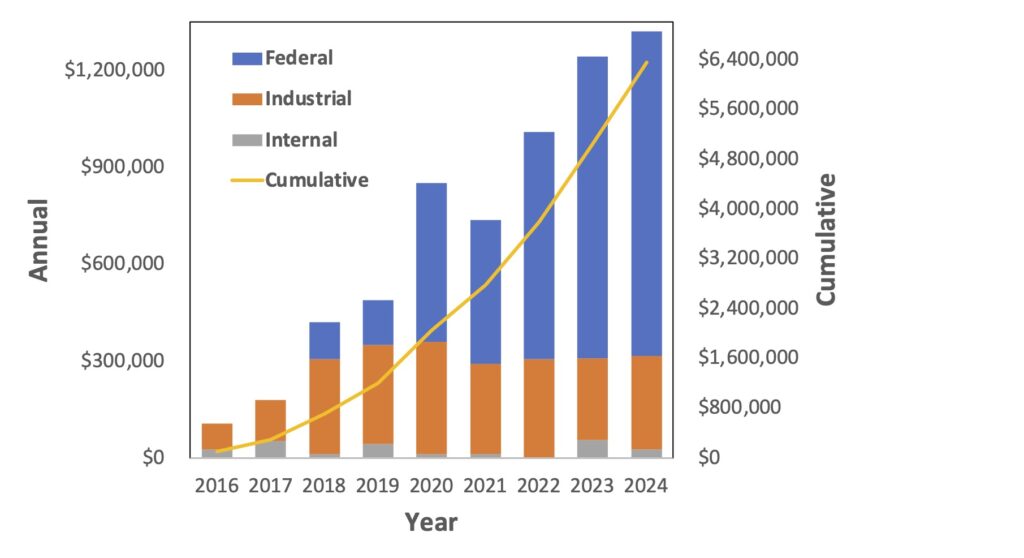
Our 2024 Annual Report Released!
Virginia Tech researchers work to create biodegradable bioplastics from food waste
Extraordinary amounts of energy, water, and capital are put into food systems. However, anywhere from 30 to 40 percent of the food that is produced ends up in landfills in the United States.
What if there was a way to convert it into something we use every day?
Researchers in Virginia Tech’s College of Agriculture and Life Sciences are doing just that by developing biodegradable bioplastics from food waste to give those materials a new – and useful – life.
“By creating cost-effective bioplastics that naturally decompose, we can reduce plastic pollution on land and in oceans and address significant issues such as greenhouse gas emissions and economic losses associated with food waste,” said lead researcher Zhiwu “Drew” Wang, associate professor in the Department of Biological Systems Engineering and director of the Center for Applied Water Research and Innovation.
The project tackles the challenge of oceanic plastic pollution that is becoming even more prevalent with microplastics affecting nearly 88 percent of all marine species, according to the World Wildlife Fund. Because they can quickly biodegrade in sea water, the Virginia Tech bioplastics have the potential to reduce the effect of pollution on marine life across the globe.
The first-of-its kind pilot project will develop and demonstrate an affordable modular bioprocessing system to produce biodegradable bioplastics from food waste.
Researchers will harness microorganisms to convert food waste into fats, which are then processed into bioplastics. This process, akin to fermentation in microbreweries, ensures that the produced bioplastics can be easily composted, mitigating marine pollution caused by microplastics. The project aims to demonstrate the feasibility and scalability of this bioprocessing system on both national and global levels.
“By creating environmentally sustainable plastics, we hope to benefit people, companies, waste management systems, and communities worldwide,” said Wang, a researcher from the College of Agriculture and Life Sciences and the College of Engineering.
Collaborating with other experts at Virginia Tech, as well as both undergraduate and graduate students, including Haibo Huang in the Department of Food Science and Technology and Young Kim in the Department of Sustainable Biomaterials, the team focuses on the purification of polyhydroxyalkanoates (PHA) and the creation of high-value bioplastic products.
“There are many the ways to generally improve sustainability in the world,” Kim said. “There are two primary methods right now. One is to use more recycling and recyclable material. The other way is to use biodegradable material. Using bioplastic is a viable option to solve our increased plastic pollution. Our approach is to improve the sustainability using biodegradable option.”
These biodegradable products include home compostable packaging, which has become increasingly popular.
Now more than a year in, this project involves student researchers who are hoping to contribute to more sustainable packaging for our world.
“Our first step is to make single-layer film to see if it can be utilized as an actual product,” said Chenxi Cao, a senior in packaging and system design. “If it has good oxygen and water vapor barriers and other properties, we can move to the next step. We aim to replace traditional coated paper products with PHA. Current paper products are often coated with polyethylene or polyactic acid, which are not fully degradable. PHA is fully biodegradable in nature, even in a backyard environment.”
Polyethylene or polyactic acid coatings are often found on single-use plastics, which can include disposable coffee mugs, films covering food, or even the ice cream cups enjoyed on a hot summer day.
For Chloe Taylor, a senior in sustainable biomaterials, joining the project has been a highlight of her college career.
“It inspired me to pursue graduate studies because traditional plastics are unsustainable,” Taylor said. “We aim to create bioplastics that are viable alternatives and can be used in everyday products without harming the environment.”
A $2.4 million grant from the U.S. Department of Agriculture is funding this applied research.
See more: Virginia Tech researchers work to create biodegradable bioplastics from food waste
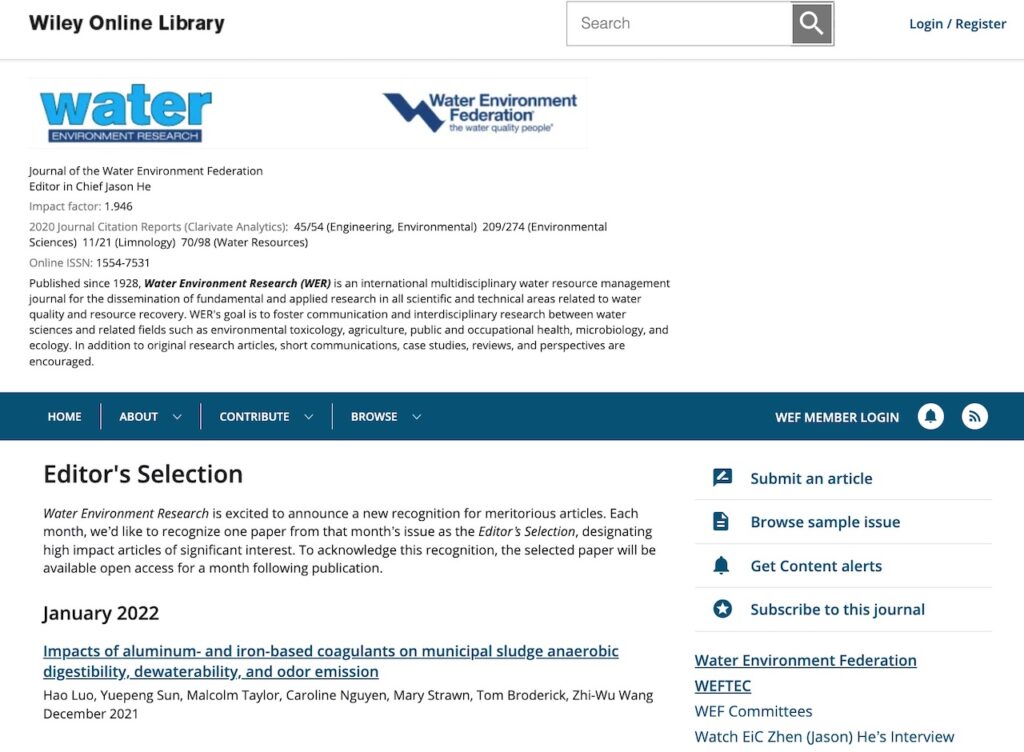
4/1/2022 Hao’s paper is recognized as the January 2022 Editor’s Selection.
This award recognizes one meritorious paper from each month’s issue, designating it as a high impact article of significant interest.
Luo H., Sun Y., Taylor M., Nguyen C., Strawn M., Broderick T., Wang Z.W. (2021) Impacts of aluminum- and iron-based coagulants on municipal sludge anaerobic digestibility, dewaterability, and odor emission, Water Environment Research, 94(1), e1684 DOI: https://doi.org/10.1002/wer.1684